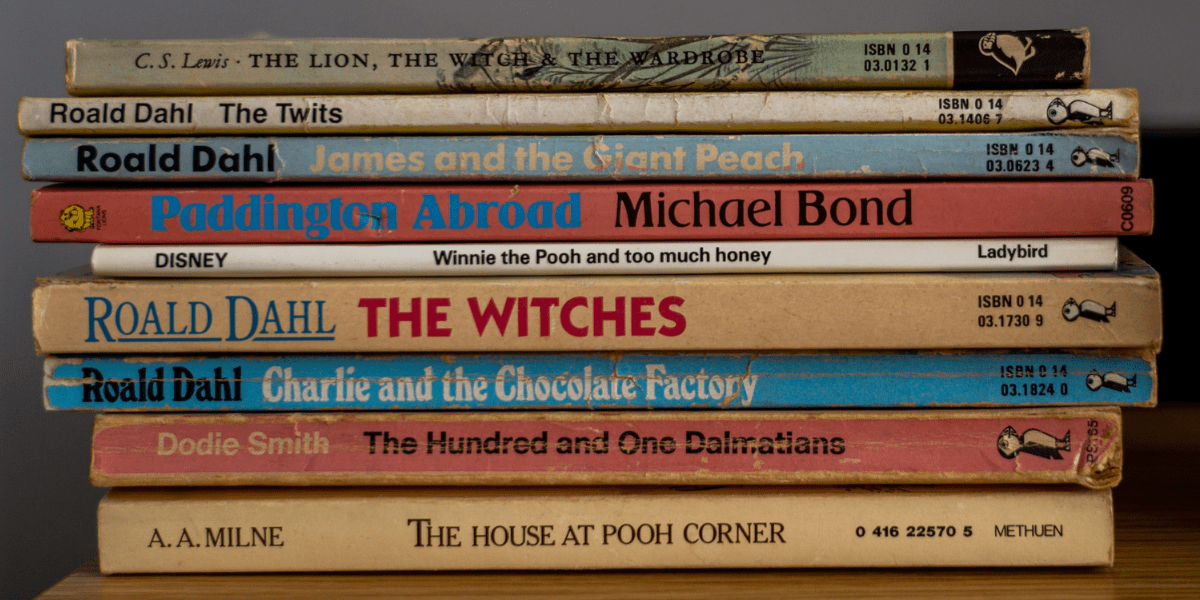
Recent news of Puffin deciding to edit Roald Dahl’s children’s titles to revise or remove language deemed offensive has led to much controversy. From Salman Rushdie to Philip Pullman and UK Prime Minister Rishi Sunak to Queen Consort Camilla Parker-Bowles, many have felt compelled to comment on Puffin’s decision. Working with Inclusive Minds, an organisation specialising in authentic representation in children’s books, the language in Dahl’s children’s titles has been softened or completely removed if considered offensive or derogatory. The word ‘fat’ has been eradicated (quite a feat for a writer whose work is rife with fatphobia in both his adult and children’s titles); ‘parents’ is favoured to ‘mothers and fathers’; ableism is edited out by removing the ‘othering’ of being bald or using crutches (among others – you can see a full list of the edits in The Telegraph’s extensive article).
Issues of morality of censorship and the impact on freedom of speech aside, this news is hugely exciting for me – it has an enormous bearing on my projecty’s exploration of the misogyny which is prevalent across Dahl’s bibliography. Puffin’s editors are now answering my question without me having to pester them with it: what do we do about problematic aspects of Dahl’s texts?
Their answer, however, is far from satisfactory. To revise and beautify the misogynistic elements of Dahl’s texts is to erase the problem so that it can’t be identified. This is – surely – a problem in itself. In the very act of censoring or removing terms which are derogatory and gendered, Puffin is making a judgement on what is acceptable. But when did the terms become unacceptable? Weren’t they always unacceptable?
***
Take the description of Mrs Wormwood in Dahl’s Matilda (1988):
“She wore heavy make-up and had one of those unfortunate bulging figures where the flesh appears to be strapped in all around the body to prevent it from falling out…”
While I’m sure we can all agree this isn’t intended to be a flattering description, Puffin have deemed this line too offensive to print and will remove it in future editions. What impact does this have on the portrayal of the character in the 1996 film adaption (directed by Danny DeVito), or the stage adaptation (written by Tim Minchin and Dennis Kelly)? It appears to me, that Puffin are inadvertently making a comment on Mrs Wormwood’s portrayal in these adaptations and deeming them unacceptable or inappropriate for young viewers because Mrs Wormwood wears heavy makeup and tight clothes.
What is it that has changed and made February 2023 the point at which we say that the language isn’t appropriate for young readers? Was this description of viewing Mrs Wormwood’s body in terms of desirability and fatphobia ever inoffensive? Will viewers of the film adaptations still criticise Mrs Wormwood’s appearance? While this line is of course lifted from the book and taken out of context, it’s vital to remember that across Dahl’s oeuvre women’s bodies are only ever described in terms of desirability. A body which was desirable was good; an undesirable body (as deemed by Dahl’s male characters) was grotesque. That Mrs Wormwood also “strap[s]” her body into tight clothes – hinting at the use of girdles, corsets, spanx or the like – also reflects the narrator’s mistrust of women who ‘deceive’ other characters by altering their appearance to be more desirable. By this, I mean that the majority of Dahl’s narrators are sceptical of women’s intentions behind adhering to social codes: by using girdles to make her body smaller, Mrs Wormwood is acknowledging that women should be skinny. But the use of girdles is a trick, a trick to make her undesirable body desirable. This is a motif used repeatedly in Dahl’s adult fiction – that men should be wary of women who ‘trick’ men into desiring their undesirable bodies. In the bigger picture, this line reflects a misogynistic tone that young readers perhaps won’t be able to comprehend. But does that make it worthy of erasure?
***
Take a moment to think about Disney’s decision to keep racist stereotypes and racially insensitive characters in their films – but with placards before these films start alerting the viewer to the problem and their decision to not erase it. The screen reads:
“This programme includes negative depictions and/or mistreatment of people or cultures. These stereotypes were wrong then and are wrong now. Rather than remove this content, we want to acknowledge its harmful impact, learn from it and spark conversation to create a more inclusive future together…”
(Puffin has a similar piece of text on their copyright page: “Words Matter…This book was written many years ago, and so we regularly review the language to ensure that it can continue to be enjoyed by all today.” Given that Puffin are authorising upwards of 600 edits across 10 texts, though, one could argue that these regular reviews are not that regular.)
There are a handful of exceptions to Disney’s placard placement, though. Song of the South is not available on any home media format nor on any streaming platform; nor are animated shorts Der Fuehrer’s Face and Education for Death, both propaganda films. The controversial elements of these titles – portrayal life for a black slave on a plantation as fulfilling, the sympathetic portrayal of Nazi youths and pro-war propaganda – are so controversial that it’s difficult to argue against their censorship.
But is Dahl’s employment of misogyny and fatphobia on the same level?
***
This isn’t the first time that Dahl’s work has been revised – in 1973, Charlie and the Chocolate Factory was republished with a new look for the Oompa Loompas. No longer were they “black African Pygmies from Africa” but they were “little fantasy creatures” with rosy cheeks and brown hair. It goes without saying that the slavery parallels were offensive when published in 1964 – but it wasn’t out of the goodness of Dahl’s heart nor the conscience of the publishers. Dahl only revised the Oompa Loompas in response to the NAACP’s threats of boycotting the 1971 movie, Willy Wonka and the Chocolate Factory for perpetuating the racist imagery. Once the financial success of the film was at stake, the Oompa Loompas became orange in the film and white in the book. (The Guardian published a good opinion piece on this theme, It’s not Orwellian for publishers to edit Roald Dahl, just commercially savvy.)
Unsurprisingly, the 2022 revisions of Charlie and the Chocolate Factory are controversial. The rewritten story of the Oompa Loompas attempts to give the characters some autonomy over their situation, but in doing so paints a picture of slavery comparable to Disney’s controversial Song of the South. According to The Telegraph’s documented changes, the Oompa Loompas democratically decide to migrate to England to live in Wonka’s factory, love living there, and love being paid in cacao beans. This differs from Wonka “import[ing]” them from Oompa Loompa land, “smuggl[ing]” them in boxes with holes in. The slavery imagery is completely undeniable – especially when we consider the original description of Oompa Loompas as “black African pygmies” – but the difference is, now the Oompa Loompas explicitly express their satisfaction and gratitude to Wonka. Much like the sympathetic view of working life on a plantation in Song of the South, the revised life of the Oompa Loompas just poorly masks the slavery parallels which were heretofore clearly visible. In making the slavery parallels less obvious, Puffin doesn’t allow children to identify the unequal power structure in the chocolate factory. If the slaves (sorry, Oompa Loompas) are happy to be there, they’re not really enslaved, are they? This is a real missed opportunity to enable children to think critically about texts and engage in discussions with their adult reader.
***
So where does this leave my PhD project? Well, I guess I can say that it’s inadvertently endorsed by Puffin now, who have directed me to what they’ve identified as problematic. So yes, Puffin: words matter. But they always have. The problematic elements of Dahl’s texts that you’ve erased or modified in 2023 have been the cause of offence for much, much longer than that. All the way back in the 1950s, Dahl was writing fiction which had xenophobia, misogyny, sexual violence, fatphobia, and much more.
Puffin’s choice to rewrite speaks volumes, and I can’t wait to dig my teeth in further.
 rosiegailor