Switch Bitch (1974) is Roald Dahl’s fourth short story collection, comprising four pieces previously published in Playboy magazine. By this time, Dahl was an established fiction writer in the US; his collections Someone Like You (1953) and Kiss Kiss (1960) had both been critically well received; he was the co-scriptwriter of You Only Live Twice (1967), Chitty Chitty Bang Bang (1968) and his own adaptation, Willy Wonka and the Chocolate Factory (1971); and he’d penned many of his most famous children’s works, including James and the Giant Peach (1961), Charlie and the Chocolate Factory (1964) and Fantastic Mr Fox (1970). Shortly after Switch Bitch was published, Dahl wrote a novel featuring the character starring in The Visitor and Bitch: My Uncle Oswald (1979). This was a very active point in Dahl’s career, and he would continue to write for adults and children until his death in 1990.
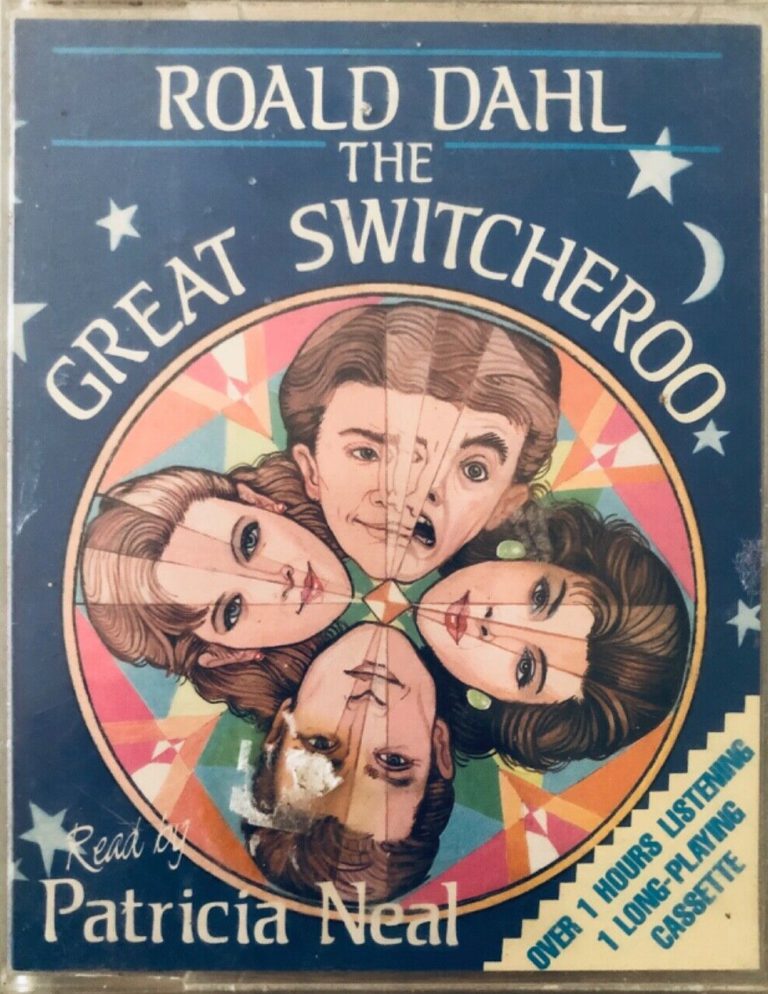
Each of the stories in Switch Bitch centres on sexual desire; in The Visitor (1965, Playboy) and Bitch (1974, Playboy) we read the diaries containing the sexual exploits of Oswald Cornelius; in The Last Act (1966, Playboy) we see the suicide of widower Anna after she is raped by her high-school sweetheart; in The Great Switcheroo (1974, Playboy) we follow Victor and Jerry as they plan to rape the other’s wife without getting caught. As with many of Dahl’s short stories, three of the four tales in Switch Bitch employ humour and colloquialisms to undermine the violence and misogyny – but in The Last Act Dahl uses a dramatic tone, deviating from his usual short-form style. As such, The Last Act offers much by way of comparison with The Great Switcheroo (Switcheroo) in particular.
Dahl’s work makes for fruitful academic analysis because it resists unilateral interpretation. His adult fiction predominantly features adults being violent to one another (through manipulation, blackmail, or physically) but their motivations and narrative arcs can often be read multiple ways – and even in defence of the acts of sexual violence. In these generous interpretations of Dahl’s stories – in which the women are using the men to orchestrate their own fulfilment – the stories are read as expressions of female agency and of women playing men at their own game, of using men for their own benefit and pleasure. But despite the defences of the story, of the merits of female agency and the ways the women in the stories might have facilitated their own rape, there is one crucial problem with The Last Act and Switcheroo: the motivation is male revenge.
Rape as an Act of Revenge
In Switcheroo, Jerry tells Victor that Mary’s refusal of his goodnight kiss – or, as he puts it, being “rebuked…in my own house” (p.65) – is “enough for [him] to want to get a little bit of [his] own back on her” (p.66). This is an explicit statement of intent, borne from a desire for revenge through an act of violence. But, despite this motivation made explicit, the language used in the story doesn’t reflect the aggressive nature of Jerry’s desire. The narrator uses a lexis of espionage and theatrics to reference the rape and present it as a pallatable, humorous plotline. When Victor and Jerry are discussing their plans to rape Samantha and Mary, they use phrases such as “cooked up a plan” (p.58), “high conspiracy”, “secret meetings”, “strategy”, “planning session” (p.66) to describe the planning period for the rapes; they also allude to being rapists as “learn[ing] a new part”, “becom[ing] an actor”, “impersonating another character”, “follow[ing] the stage directions” (p.63). This language encourages the reader to see the ‘great switcheroo’ as exciting and comical, more like the montage in an action-comedy movie than a methodically planned, violent rape.
The motivations frame the act of rape as an act of power, of ownership. It is a male right to have sex with the women they choose, and rape becomes the punishment for disrupting the power hierarchy through their refusal of sexual advances. This is equally true for Conrad in The Last Act: he believes that he and Anna have “unfinished business” (p.103) because they broke up before consummating their relationship. Conrad’s phrasing is suggestive of a debt, of Anna owing Conrad closure through the form of sex. He exhibits coercive behaviour to manipulate Anna: he undermines her confidence by identifying medical issues (she drinks too much gin, she smokes too much); he steers the conversation to her sexual organs (the gin affects her uterus, the menthol in her cigarettes are anti-aphrodisiacs); and he insinuates that it is her fault that he married someone else on the rebound. Conrad presents this information to her as though he is doing her a favour; the phrasing places Anna in emotional debt to Conrad. It reveals to the reader that Conrad has already convinced himself that this “unfinished business” will be finished that night, and he will engineer the circumstances to permit it and will manipulate Anna into consenting. Of course, if the reader is invested in the interpretation of Anna manipulating Conrad into raping her, this conversation has a different power struggle.
A Pattern Emerges
Combined, these narrative devices reveal a pattern within Dahl’s adult fiction: the build-up of the narrative to rape; the non-specific sex acts referred to in metaphors and euphemisms; moral tales of male ego and sexual hubris which is humbled through sexual violence; the use of comedy to deflect and undermine aggression; the mimicry and mockery of female sexual agency and consent; and narratorial inserts. These tropes can be found in all four stories in Switch Bitch, as well as across his oeuvre, including his children’s fiction. So how do the narrators – and Dahl – get away with it? How is no one, ultimately, held accountable?
More thoughts coming – stay tuned…
 rosiegailor
Dear Rosie, Thank you for doing this important and difficult work. I had the misfortune to read The [not so] Great Swicheroo about twenty years ago and I have never really enjoyed Dahl’s work since. Your analysis of the text:
being rebuked…
getting his own back…
[Dahl] uses a lexis of espionage and theatrics to reference the rape and present it as a palatable, humorous plotline …
framing rape as an act of power, of ownership …
Matilda notwithstanding, your analysis really helped me understand why I don’t like Dahl.
All strength to your writing arm and your PhD.
LikeLike